.png)


.webp)
Natural Disasters and Children: Before, During and After

Bushfires, floods, storms, cyclones and other natural disasters can disrupt a child’s sense of safety, daily routines, relationships and community. Children may be directly affected, evacuated from home, separated from important people or exposed through repeated news and social media. Their reactions vary. Many recover with safety, connection and practical support, while some develop difficulties that need closer attention.
A child’s response depends on what happened, whether danger or disruption is continuing, their age and development, previous experiences, family circumstances and the support available. Distress after a disaster is not automatically Post-Traumatic Stress Disorder (PTSD). Parents do not need to decide on a diagnosis before asking for help.
This guide covers practical support before, during and after a disaster. During an active emergency, physical safety and official instructions come first. Follow emergency services and local warnings. Call Triple Zero (000) for urgent police, fire or ambulance assistance.
Prepare children without increasing fear
Preparation can make an unfamiliar event more predictable. Explain the hazards relevant to your area in calm, concrete language and involve children in age-appropriate parts of the family plan. Preparation should give a child useful knowledge without making them responsible for adult safety decisions.
- Identify where your family will go, how you will communicate and which trusted adults can collect or care for the child.
- Show children where to find reliable alerts and explain that adults will decide when to act.
- Practise the plan briefly, then discuss what worked and what needs changing.
- Pack medicines, health information, communication aids, mobility equipment and sensory supports that a family member may need.
- Include comfort items, activities and familiar foods where practical.
- Tell the school or early learning service about important medical, disability, cultural or communication needs.
Ask what the child already knows. Correct misunderstandings and answer the question they asked rather than giving every possible detail. Our guide to talking with children about tragedy and distressing events offers additional guidance for difficult conversations.
Recommended Online Course


Support children during an emergency
Children look to trusted adults for information and reassurance. Adults may also be frightened, exhausted or overwhelmed. Calm does not mean pretending that nothing is happening. It means using short, accurate explanations and showing the child what is being done to keep people safe.
- Follow official instructions and attend to immediate physical and medical needs.
- Keep the child with a trusted caregiver where possible and explain any necessary separation.
- Say what is known, what is not yet known and what will happen next.
- Use the child’s usual communication method, including pictures, signs or communication devices.
- Offer simple choices when it is safe, such as which comfort item to bring.
- Help with food, water, rest, warmth, medication and sensory regulation.
- Do not ask the child to calm or reassure distressed adults.
Babies and young children may respond to changes in caregivers, noise, routines and surroundings even when they do not understand the event. Familiar voices, physical closeness when welcomed and repeated care routines can help maintain connection.
Manage news and social media exposure
Repeated footage can make an event feel as though it is happening again. Young children may not understand that replayed images show the same event. Reduce unnecessary exposure, especially graphic footage and adult conversations that the child cannot interpret.
Older children and teenagers may receive updates through friends, group chats and social media. Ask what they have seen, check the source together and correct misinformation without dismissing their concern. Keep access to reliable safety information while creating breaks from continuous coverage.
Help children in the first days afterwards
Recovery begins with safety and basic needs. Housing, schooling, transport, finances, health care and community connection can all affect family wellbeing. A flexible routine can help, but families living through displacement or loss may not be able to restore normal life quickly.
- Give clear updates about where the family will stay and when plans may change.
- Reconnect the child with familiar people, school, play and community activities when possible.
- Allow play, drawing, movement, quiet time or conversation without forcing the child to describe what happened.
- Acknowledge losses of people, animals, homes, belongings, places and routines.
- Notice and respond to practical stressors affecting the whole family.
- Let teachers and carers know what the child has experienced and what helps them feel safe.
Further Reading
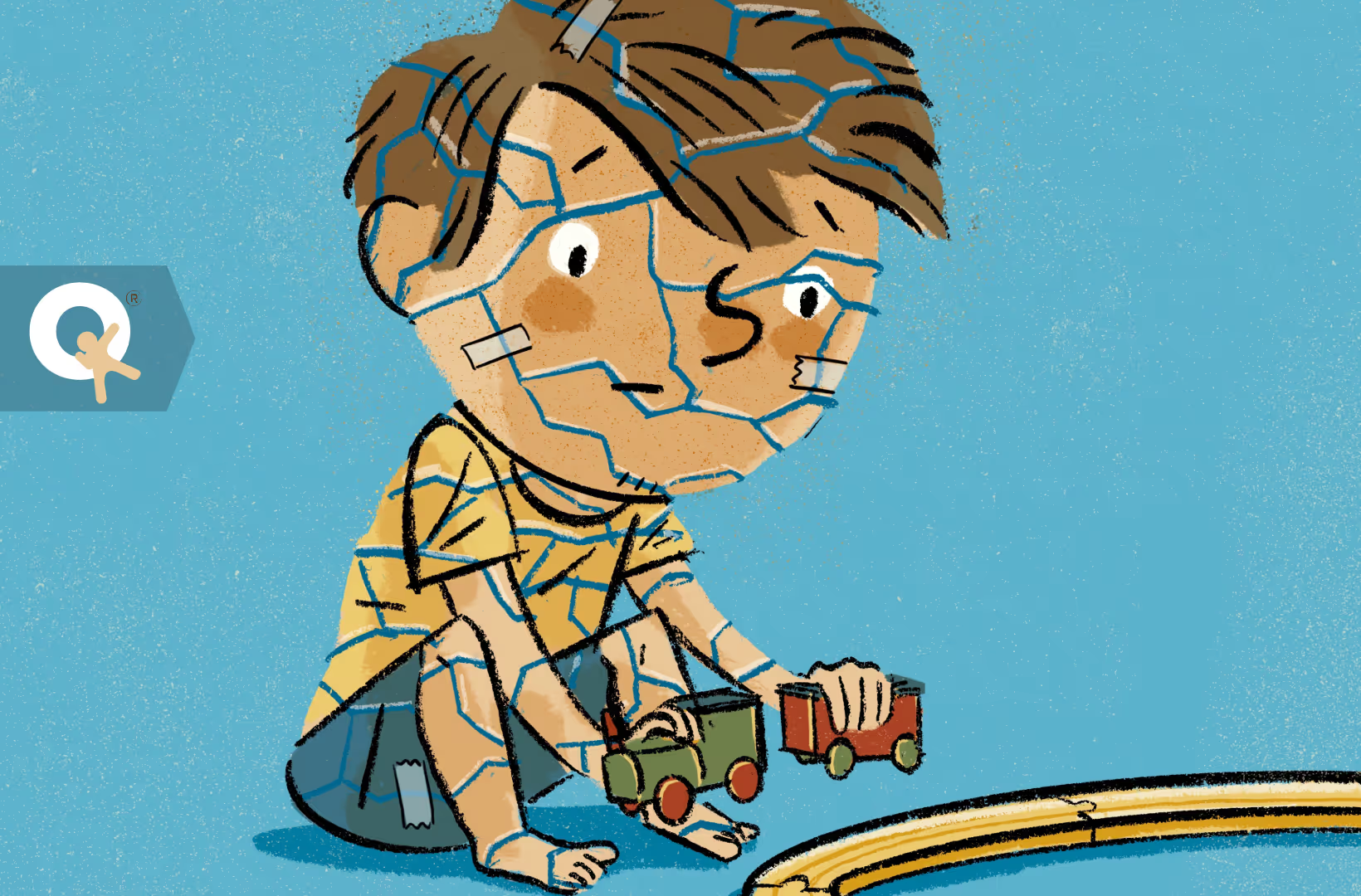
Common reactions after a natural disaster
Children can move between distress and ordinary play. Reactions may begin immediately or become clearer later. One sign does not establish a mental health condition. Look at the pattern, persistence, severity and effect on everyday functioning.
Babies and young children
- increased clinginess or distress during separation
- changes in sleep, feeding, toileting or language
- new fears, repetitive disaster-themed play or stronger reactions to noise
- irritability, withdrawal or loss of recently gained independence.
School-aged children
- nightmares, concentration difficulties or physical complaints
- worry about another disaster or the safety of family members
- avoidance of school, weather, places or reminders
- changes in play, friendships, behaviour or confidence.
Teenagers
- sleep disruption, irritability, withdrawal or risk-taking
- difficulty concentrating or returning to school and activities
- guilt, helplessness, low mood or persistent threat monitoring
- increased conflict, substance use or pressure to take on adult responsibilities.
Development, disability, language and culture influence how distress is communicated. An autistic child or a child with sensory, intellectual, physical or communication needs may be particularly affected by disrupted routines, unfamiliar environments, noise or loss of supports. Adapt communication and the environment rather than assuming a behaviour is defiance.
Use a watchful and supportive approach
Check in without repeatedly questioning the child. Ask what feels hardest now, what helps and whether anything has changed at home, school, sleep or relationships. Support should match the child’s needs and views.
Psychological first aid is a humane, practical response to distress. It focuses on safety, calm listening, immediate needs, connection and access to further support. It is not psychotherapy and does not require a child to recount the event in detail. Avoid compulsory emotional debriefing or pressuring a child to talk before they are ready.
For younger children or children showing broader trauma reactions, see supporting young children through trauma. When worry relates mainly to environmental threats and climate change rather than direct disaster exposure, our guide to children’s eco-anxiety addresses that distinct concern.
BriteChild® Mental health care for Kids.
Personalised care for kids, trusted guidance for parents—anytime, anywhere in Australia.
.avif)
When to seek professional support
Consider speaking with a GP, psychologist, school counsellor or another appropriate health professional when reactions are severe, worsening, persist over time or interfere with sleep, learning, relationships, self-care or returning to everyday activities. Earlier support may also be appropriate when the child experienced bereavement, injury, displacement, previous trauma or continuing danger.
Seek urgent assistance if a child is at immediate risk, has thoughts or actions involving suicide or self-harm, cannot be kept safe or is experiencing a medical emergency. Call Triple Zero (000) in an emergency. Australian Government disaster and mental health services can help families locate immediate and longer-term assistance.
What treatment can involve
A clinician should first understand the child’s experiences, symptoms, development, family circumstances and current safety. Not every distressed child requires trauma-focused treatment. When clinically significant post-traumatic symptoms persist, structured psychological therapies may be considered.
A 2024 network meta-analysis of 26 randomised studies involving 4,331 children and adolescents exposed to natural and human-made disasters found evidence that several psychological interventions reduced PTSD symptoms compared with inactive controls. The comparisons between active treatments and longer-term findings were more limited, so the results should not be treated as a universal ranking for every child.
How Quirky Kid can help
A Quirky Kid psychologist can help assess persistent changes in a child’s emotions, behaviour and daily functioning and consider whether psychological support is appropriate. Explore child and family psychology consultations. Immediate disaster relief, emergency housing, medical care and crisis response should be sought through the relevant government and emergency services.
Key points for families
- Physical safety and official emergency instructions come first.
- Preparation should be practical, age-appropriate and inclusive of disability and communication needs.
- Give honest information, protect children from repeated graphic exposure and maintain connection.
- Do not force children to recount the event or assume every reaction is PTSD.
- Seek help when distress is severe, worsening, persistent or disrupting everyday life.
This article provides general information and does not replace emergency instructions, medical care, psychological assessment or individual treatment advice.
View article references

- Australian Government Department of Health, Disability and Ageing. (2026). Support after a natural disaster.
- healthdirect Australia. (2026). Supporting children through a natural disaster.
- Emerging Minds. (2026). Community Trauma Toolkit.
- Morgan, B. & Roberts, M. (2022). Helping your children in a flood emergency. Emerging Minds and the Australian Child and Adolescent Trauma, Loss & Grief Network.
- Australian Red Cross. (2024). Psychological first aid: An Australian guide to supporting people affected by disaster.
- Xie, Y., Zhu, X., Wang, L., Wan, Z., Yang, J., Su, C., Duan, S., Xu, C. & Kan, B. (2024). A network meta-analysis of psychological interventions for children and adolescents after natural and man-made disasters. BMC Psychiatry, 24, 468. https://doi.org/10.1186/s12888-024-05924-8.

.avif)
Related Products
Subscribe to our Newsletter

